
Mastering Influence
Learn the skill of more powerful outcomes through meaningful conversations.
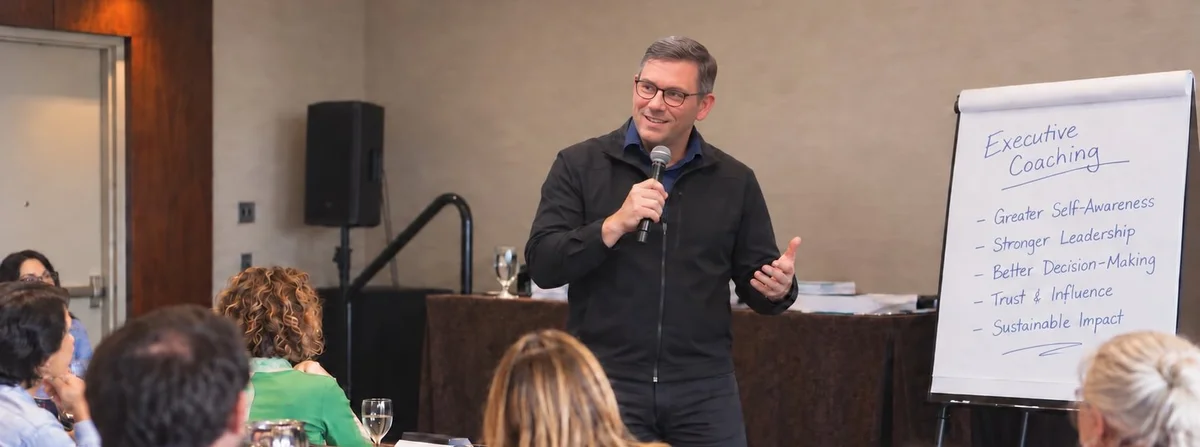
over two weeks
Have you ever seen what changes when you communicate more intentionally?
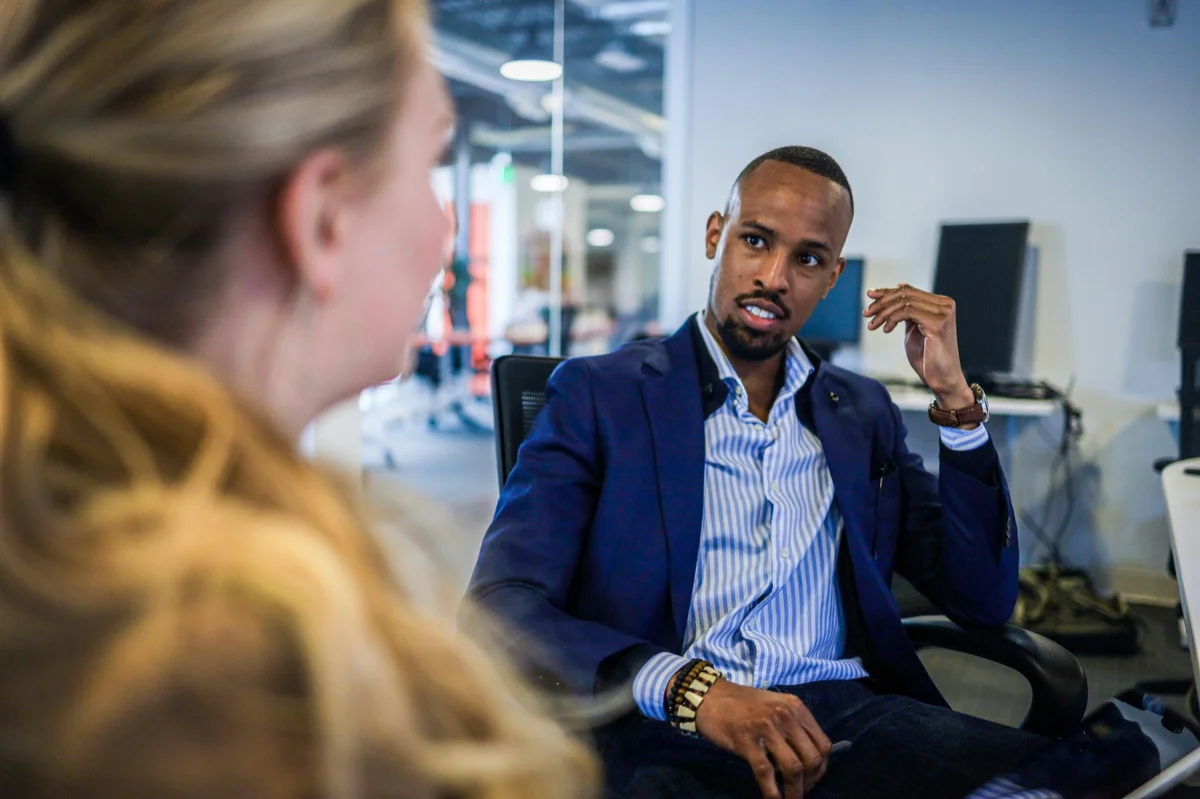
Maybe you’ve noticed how you feel after a conversation with someone who makes you feel heard. Or one day you tried a different question, and it opened up an entirely different response than you were expecting (in a good way). Or as you were speaking, you realized there were more choices available to you than you first thought.
That awareness is valuable.
But being able to make those choices consistently, with different people and under real-world pressure, takes practice.
That’s what we’ll do inside Mastering Influence.
Over four live sessions, you’ll study some of the most useful frameworks in persuasion, communication, negotiation, behavioral psychology, and human connection.
Then you’ll test them in conversation and even writing messages. So you’re ready for real situations whenever you need them.
Who is Mastering Influence for?
This program is designed for people whose results depend, at least in part, on the quality of their conversations.That could include:
Coaches and consultants
who need to ask better questions, build trust, and help people move toward decisions.
Leaders and managers
navigating difficult conversations, alignment, feedback, and change.
Business owners and entrepreneurs
communicating ideas, making offers, negotiating, and winning support.
Speakers and communicators
who want their ideas to land with greater clarity and impact.
Professionals
who simply want to become more intentional and effective in the conversations that shape their work and lives.
You don’t need to arrive as an expert in persuasion, psychology, or NLP.
Come ready to participate, practice, and experiment.
Influence people without losing yourself in the process.
The usual advice
There’s no shortage of advice on how to persuade people.
- Say this.
- Use this psychological trigger.
- Ask this exact question.
- Make them feel urgency.
What actually works
But lasting influence isn’t about tricks.
You need to understand why people make decisions, hear what their language is telling you, build genuine connection, communicate clearly under pressure, and recognize when an ask creates value for everyone involved.
That’s why the guiding standard throughout this program is the 3-Way Win.
Your influence should work for you.
It should respect the person you’re speaking with.
And the outcome should make sense for the situation as a whole.
You’ll learn persuasive tools, but you’ll also learn how to apply them with ethics and judgment.
What You’ll Learn
Over two weeks, you’ll build your influence skills from the ground up.
Session 1: Foundations
The Science of Why People Say Yes
Learn to diagnose the forces behind a decision and build an ethical ask around them.
You’ll explore:
Aristotle’s Triangle
Bring credibility, emotion, and logic together in a stronger ask.
Cialdini’s 7 Principles of Influence
Explore reciprocity, commitment, social proof, liking, authority, scarcity, and unity.
Kahneman’s System 1 and System 2
Understand when people are making fast, intuitive decisions and when they need more deliberate thinking.
The Fogg Behavior Model
Explore how motivation, ability, and prompts combine to make action more likely.
The Yes Audit
Working in triads, you’ll reverse-engineer real decisions and test them against the 3-Way Win.
Then you’ll take the work outside the training room by auditing three of your own recent asks and testing one principle in a live conversation.
Session 2: Language
The Words That Move Minds
Influence changes when you stop hearing only what someone says and start noticing how they process and respond to information.
In this session, you’ll learn to listen to language with greater precision and reshape your own messages so they land the way you intend.
You’ll explore:
NLP Representational Systems
Recognize visual, auditory, and kinesthetic language patterns.
The Milton Model
Study Ericksonian language patterns designed to reduce unnecessary resistance.
Carnegie’s Core Five
Apply interpersonal principles that build goodwill and connection.
Luntz Word Swaps
See how small changes in wording can produce very different responses.
The Linguistic Dojo
Rotate through speaker, listener, and observer roles while practicing these patterns against real messages.
Then put them to use by tracking five real-world language deployments and rewriting one high-stakes email or message.
Session 3: Connection
Rapport, Empathy and Negotiation
Some conversations become difficult long before anyone says the “wrong” thing.
Defensiveness creeps in and people start arguing positions instead of understanding what each person actually needs.
This session is about staying effective when state changes and the conversation becomes harder.
You’ll explore:
Voss’s Tactical Empathy
Practice mirroring, labeling, calibrated questions, and the accusation audit.
Goleman’s Four EQ Domains
Read and reset your own emotional state before responding.
Sinek’s Golden Circle
Lead with purpose and context before getting buried in detail.
Fisher and Ury’s Negotiation Principles
Separate people from problems, negotiate around interests, and understand your BATNA.
The High-Stakes Conversation
Rehearse a real, difficult ask against live resistance.
You’ll receive feedback on empathy, framing, and follow-through, then take the conversation into the real world and reflect on what changed.
Session 4: Mastery
Story, Frames and Ethical Application
The final session that brings the pieces together.
You’ll learn how to structure an idea so people can understand what matters, remember it, and make a meaningful decision about what comes next.
You’ll explore:
Berger’s STEPPS
Learn the six drivers that help ideas spread.
Campbell’s Hero’s Journey
Structure communication around the audience rather than making yourself the hero.
Brown on Vulnerability
Explore honesty and openness as channels for trust and leadership.
Thaler and Sunstein
Understand nudges, defaults, and how the architecture of choice influences decisions.
The Strategic Ascension Pitch
Bring everything together in a five-minute live pitch built around Status, Stakes, and Surprise.
You’ll deliver it live and receive feedback from faculty and peers.
Then you’ll create your own Influence Code, a personal standard for how you want to use these skills moving forward.
You won’t spend these sessions sitting quietly with your camera off and taking 47 pages of notes.
Each three-hour session includes:
Teaching
Explore four major frameworks and see how they fit into a practical system.
Live Practice
Spend 45 to 60 minutes applying what you’ve learned through structured exercises.
Q&A
Bring your questions and get help applying the work.
Field Work
Take one assignment into your real life before the next session.
By the end of Mastering Influence, you’ll have practiced how to:
-
01
Diagnose what may be driving another person’s decision
-
02
Build stronger, more ethical asks
-
03
Adapt your language to the person you’re communicating with
-
04
Recognize and reduce unnecessary resistance
-
05
Reset your own state before difficult conversations
-
06
Use empathy and questioning in high-stakes situations
-
07
Negotiate around interests rather than becoming trapped in opposing positions
-
08
Structure ideas and pitches so the audience can clearly understand what matters
-
09
Apply influence frameworks while keeping choice and mutual benefit at the center
And because much of the work happens through your own real conversations and messages, you won’t have to wait until the course is over to begin using it.

around the world
Keith Leonard
Chief Learning Officer, Madanes Institute
Keith Leonard is Chief Learning Officer at Madanes Institute and an experienced coach, educator, and leadership strategist. He’s trained over 10,000 people from around the world, including over 1,500 in NLP and executive coaching.
His work centers on the conversations that shape outcomes: how we manage ourselves under pressure, understand the person in front of us, communicate with greater precision, and move important ideas toward meaningful action.
Throughout Mastering Influence, Keith will help you move beyond understanding the frameworks intellectually.
You’ll watch them demonstrated, experiment with them yourself, receive feedback, and explore how they work across different people and situations.
Because influence becomes far more useful once it leaves the slide deck.
Four live sessions. Two weeks. A lot of practice.
-
Nov10
Tuesday, November 10
Foundations
The Science of Why People Say Yes
-
Nov12
Thursday, November 12
Language
The Words That Move Minds
-
Nov17
Tuesday, November 17
Connection
Rapport, Empathy and Negotiation
-
Nov19
Thursday, November 19
Mastery
Story, Frames and Ethical Application
- FormatLive on Zoom
- InstructorKeith Leonard
- Sessions3 hours each
- ProgramLive certification in ethical persuasion
Take Your Influence to the Next Level
Deepen your ability to lead with intention through your state, language, presence, and communication.
Build practical skills, experiment with new approaches, and get feedback as you bring what you learn into real conversations.
Mastering Influence
A live certification in ethical persuasion
Regular tuition: $495
Your price today
$197
You save $298.- 4 live sessions on Zoom with Keith Leonard
- November 10, 12, 17 & 19
- 3 hours each
- Replays available
Secure checkout
Frequently Asked Questions
When is Mastering Influence?
The program takes place live over two weeks on:
- Tuesday, November 101pm PT
- Thursday, November 121pm PT
- Tuesday, November 171pm PT
- Thursday, November 191pm PT
Each session is approximately 3 hours.
Will replays be available?
Yes. If you can’t attend a session live or want to revisit the training, replays will be available.
Can I attend only one day?
Yes, but Mastering Influence is designed as a four-session experience, with each session building on the skills and practice from the previous one.
For the strongest experience, we recommend attending all four sessions live where possible.
What principles and frameworks will I learn?
Mastering Influence brings together ideas and frameworks from more than 2,000 years of thinking on persuasion, communication, psychology, negotiation, and human behavior.
You’ll explore work and principles associated with thinkers including:
- Aristotle
- Dr. Robert Cialdini
- Daniel Kahneman
- B.J. Fogg
- Dale Carnegie
- Chris Voss
- Daniel Goleman
- Simon Sinek
- Roger Fisher and William Ury
- Jonah Berger
- Joseph Campbell
- Brené Brown
- Richard Thaler
- Cass Sunstein
- and others
The program also features licensed content from Dr. Robert Cialdini.
Keith Leonard will bring these different ideas together, demonstrate how they can be applied, and guide you through live practice using real conversations, messages, and decisions.
Do I need previous experience?
No previous training in persuasion, coaching, NLP, or psychology is required.
Come ready to participate, experiment with the frameworks, and apply them to situations from your own work and life.